|
ALASKA FLOAT TRIP PERSONAL GEAR LIST (page 2) * WHAT TO BRING & WHY
CLOTHING AND BASIC OUTDOORS GEAR - What to Bring and Why
(continued)
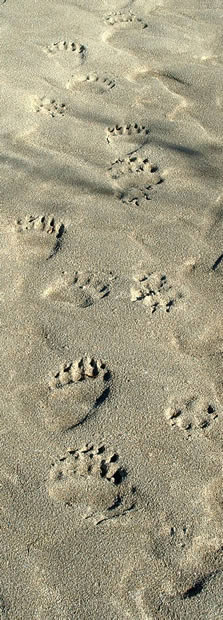 Footwear
for Alaska River Float Trips: Footwear
for Alaska River Float Trips:
Footwear should fit well ahead of time and be functional. Your
preferred, intended design of footwear should be able to hold up
under Alaska's variable conditions. Many of Alaska's outdoor
travelers rely on knee high, rubber boots with good traction while
others go to extremes. No one choice of footwear is ideal for all
conditions. On a river float trip, feet can become surprisingly cold when
exposed to water temperatures of 40 degrees or near freezing, with the
addition of potentially cold days and chilling winds. Overland, whether
trekking around camp, day hiking, full-on trekking and exploring the
same conditions can exist. What footwear works best? For exploring
the river environment, neoprene or laminated breathable bib-style chest waders
with supportive wading shoes are most appropriate for Alaska's
sometimes rugged yet slippery (wading the stream or on the river
bank) conditions. On warmer days, river or
adventure sandals and surf booties work okay although they offer
quite insufficient protection from stones, sharp snags, bugs, boat
components, fishing gear, etc. All
of these forms of footwear are certainly considerably safer than ordinary
rubber hip boots that can fill up with water and act as an anchor
should you ever fall in or become dragged in by a fighting a
monster 65 lb. King
Salmon.
Special note to inflatable boaters:
PLEASE!!! '''''NO STUDDED WADING SHOES''''
MOSTLY common sense... they are just not too fitting for inflatable boats
and will more than likely cause costly damage.
When touring overland: lightweight, water resistant, fast-drying
hiking shoes or rubber boots are ideal for rugged day treks as well
as for around camp. They are considerably more comfortable and pack
easier than heavy lug-soled boots.
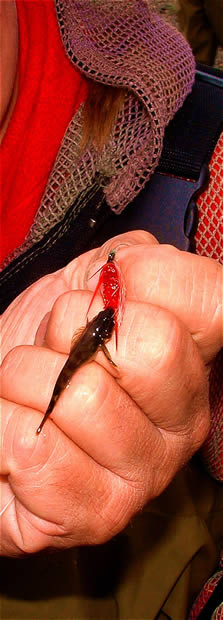 Insect Protection for Alaska
River Float Trips: Insect Protection for Alaska
River Float Trips:
Mosquitoes, White socks, Gnats, biting flies, and no-see-ums can
be endlessly irritating in some parts of Alaska. There are
numerous, highly effective repellents to choose from -some greatly
more effectual than others for Alaskan bugs. Familiar brand name
repellents are composed of specified active ingredient chemicals
with varying concentrations. Any defense when the bugs are bad is
better than none at all! Some repellents positively work
better than others. The most effective personal repellents contain
high concentrations of DEET (Diethylmetatolumide) like Ben's
100, R.E.I.'s Jungle Juice, etc. If you need a dilution of DEET
consider adding it into your favorite sun cream or buying OFF 20-30% DEET.
PHOTOGRAPHERS should consider OFF with 5% Picardin. If you choose
NOT to use personal repellents on your skin, there are
very effective alternatives. Use Area-type repellents or wear
hooded mesh bug jackets impregnated
with DEET repellent. Outerwear and camp gear can be coated
with SAWYER Permethrin insecticide clothing treatments.
Often just having a head net will work wonders. No need to
be part of the feeding frenzy.
Could the threat of West Nile Virus come to Alaska?
- State of Alaska Epidemiology -
Theoretically, certain birds carrying WNV could migrate to Alaska.
Many species of mosquitoes are known to carry and transmit WNV,
some of which are endemic or have been found in Alaska... To
establish a focus of WNV in Alaska, the correct combination of
birds, mosquitoes, and climatic conditions must occur. Given our
short summer mosquito seasons, experts feel that this is unlikely;
however, the State still plans to develop protocols and programs
for WNV testing.
Are you likely to get sick or die from using DEET? -
NO.
This would have to be a cumulative effect that nearly no one
would ever have sufficient exposure to over significant,
repetitive use, dose, & time. Those that use
the 20-30% or less can expect frequent reapplications.
For additional information or questions -
see
CONTACT & EMAIL
|